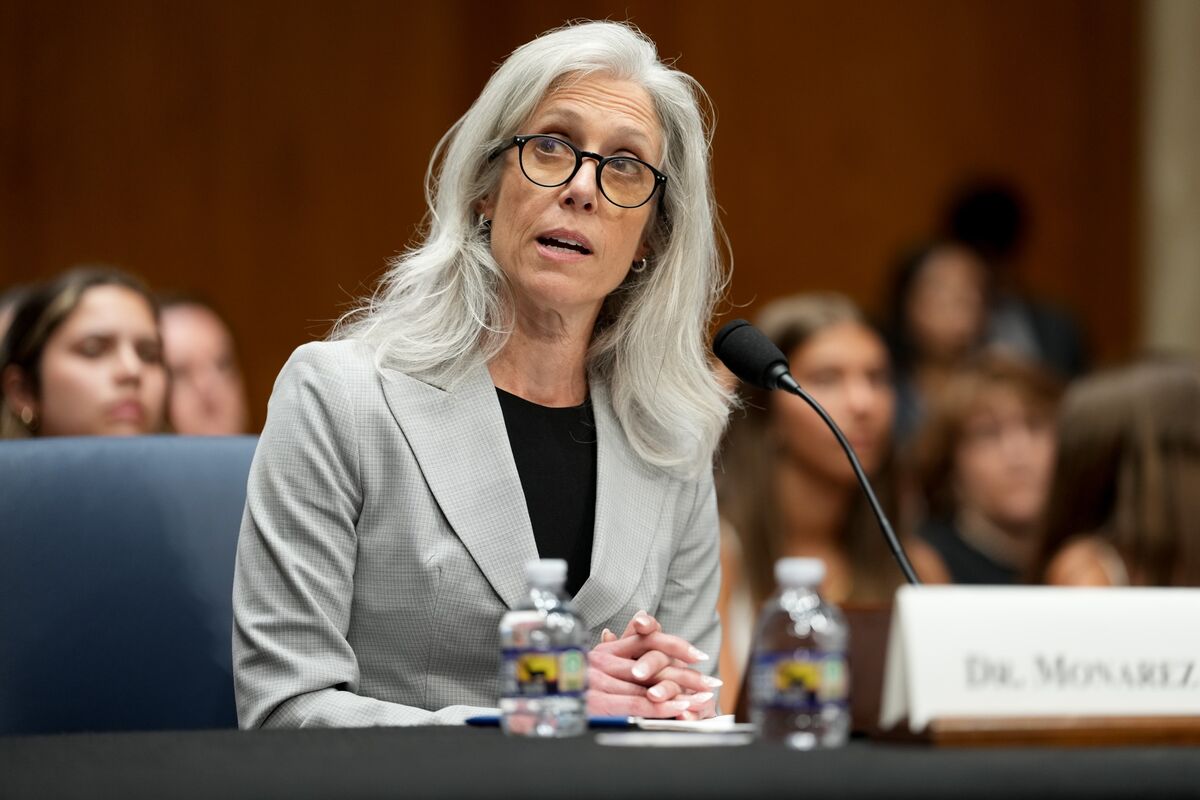

The leader of the country’s foremost public health institution recently issued an important command to her staff. During a recent gathering, she emphasized the significant dangers that misinformation presents to public health. This statement served as a straightforward reminder that, in the current digital environment, combating false stories is integral to the institution’s purpose. Her remarks underline the new difficulties in health communication in a time when trust is precarious.
This internal call to action comes at a critical time. The past few years have demonstrated how quickly and widely misinformation can spread, often with devastating consequences. During a global public health crisis, for example, unproven treatments and conspiracy theories flourished online. These false claims sowed confusion and undermined public trust in scientific institutions. The director’s words were a direct acknowledgment of this unprecedented challenge and the agency’s role in confronting it head-on.
The director’s message was not just for the public; it was for the agency’s own ranks. It served as a powerful reminder that every member of the staff is a representative of the organization. Their actions, their words, and their commitment to accuracy are vital. By emphasizing the importance of internal alignment, the director signaled that the agency must be a unified front in its communication. This internal focus is key to ensuring that the agency’s message is consistent and data-backed.
The challenges of the digital age have transformed how public health information is consumed. Social media platforms, while powerful tools for communication, can also be fertile ground for the propagation of falsehoods. Algorithms often amplify sensational and polarizing content, making it difficult for accurate, fact-based information to break through. This creates an environment where a legitimate public health warning can be drowned out by a wave of unverified claims, making the agency’s work more difficult than ever.
Misinformation, as the director’s statement implies, is not a simple problem. It can take many forms, from well-intentioned but incorrect advice to deliberately crafted disinformation campaigns. These false narratives can fuel vaccine hesitancy, promote dangerous self-medication, and erode the public’s confidence in life-saving medical science. The consequences are far from abstract; they can be measured in illness, hospitalizations, and preventable deaths.
The agency’s response must be multifaceted. It involves not just correcting false information but also being proactive and transparent in its communication. This means using plain language, creating clear and accessible visuals, and engaging with the public through a variety of channels. The goal is to build a foundation of trust and credibility that is strong enough to withstand the onslaught of misinformation. The director’s message to her staff is a critical first step in fortifying that foundation.
The duties related to ethics in a public health organization are significant. Its mission is to safeguard and enhance public health utilizing scientific methods and proof. The warning from the director reiterates this fundamental idea. It reminds us that the agency’s activities are based on science, not politics. By ensuring its communication is based on facts and evidence, the agency preserves its credibility and offers the public trustworthy information to make well-informed health decisions.
Looking ahead, the threat of misinformation is only set to grow more sophisticated. The rise of new technologies, such as advanced artificial intelligence, could create even more convincing false content. The director’s warning is a prescient one, a signal that the agency must innovate its own strategies to stay ahead of this evolving threat. This means investing in new communication technologies, training staff in media literacy, and building a network of partners who can help disseminate accurate information.
In summary, the statement from the head of the CDC to her team, highlighting that “misinformation can be dangerous,” is both potent and essential. This acknowledges the changing challenges in public health communication and serves as a direct instruction to the agency’s personnel. It emphasizes that, in the current information era, upholding truth and precision is not only a professional responsibility but also crucial for public health. This declaration urges the agency to spearhead efforts with clarity, openness, and a steadfast commitment to its primary mission.
The CDC’s latest internal communication marks a pivotal moment, highlighting a significant transformation in the agency’s perspective on its responsibilities. Traditionally, their main objective centered around epidemiology, which involves understanding disease trends and their origins. Currently, this objective has broadened to encompass infodemiology, which examines the dissemination of information and its impact on health-related actions. The director’s address indicates that this emerging field has become a central element of the agency’s approach, recognizing that misleading information that spreads widely can be as detrimental as a physical virus.
This change arises directly from insights gained during the global pandemic. The pandemic extended beyond a health emergency; it became a public health infodemic. Misinformation regarding matters from mask effectiveness to vaccine safety proliferated rapidly, frequently exceeding the timeliness of formal communication. The CDC frequently found itself in a defensive stance, attempting to address widely accepted narratives. This situation highlighted to the organization that merely sharing information is insufficient; it must also actively influence and guide public discourse in advance.
The head’s emphasis on the internal team is vital to this new plan. The agency’s extensive personnel, which includes veteran scientists and researchers as well as public relations experts and digital content producers, needs to work from one cohesive strategy. This coordinated method guarantees that, no matter the origin, a communication from the agency is uniform, precise, and without discrepancies. Essentially, the head is urging all employees to act as guardians of the agency’s reputation, making sure their contributions, whether it’s an academic article or a post on social media, support the organization’s dedication to maintaining scientific honesty.
The threat of misinformation is multi-layered, and the director’s speech reflects this complexity. It encompasses not only intentional disinformation but also the unintended spread of false information. For example, a well-meaning but ill-informed social media post can do almost as much damage as a coordinated campaign to deceive. The key, as the director emphasized, is to address the root causes: lack of trust, fear, and a desire for simple answers to complex problems. The agency’s job is not just to provide data but to provide context and understanding in a way that builds a bridge to a skeptical public.
Furthermore, the director’s directive acknowledges that the fight against misinformation cannot be won alone. The agency must collaborate with a wide array of partners, from state and local health departments to community leaders, academic institutions, and even technology companies. These partnerships are essential for disseminating accurate information through trusted local channels and for developing innovative strategies to combat misinformation where it lives. The director is signaling that the CDC must be a convenor, bringing together diverse voices to create a resilient and robust information ecosystem.
The upcoming phase of this conflict is being influenced by a fresh set of technologies. The rise of generative artificial intelligence (AI) presents an extraordinary challenge. Advanced AI systems can now create extremely realistic fake images, sounds, and videos, making the task of telling apart genuine from fake content increasingly complex. The director’s cautionary advice is visionary, equipping the agency for a time when the boundary between truth and falsehood is more obscured than ever. This necessitates a renewed focus on digital forensics, media education, and the creation of methods to identify and mark AI-generated misinformation.
The director’s message is a powerful statement about the agency’s resilience and its determination to adapt to a changing world. It’s an acknowledgment that the science of public health extends beyond the laboratory and into the digital sphere. By prioritizing a clear, unified, and proactive approach to communication, the CDC is not just preparing for the next public health crisis; it is laying the groundwork for a future where trust, transparency, and scientific integrity are the cornerstones of public well-being. This directive is a clear signal that the agency is ready to lead this new and vital front.