
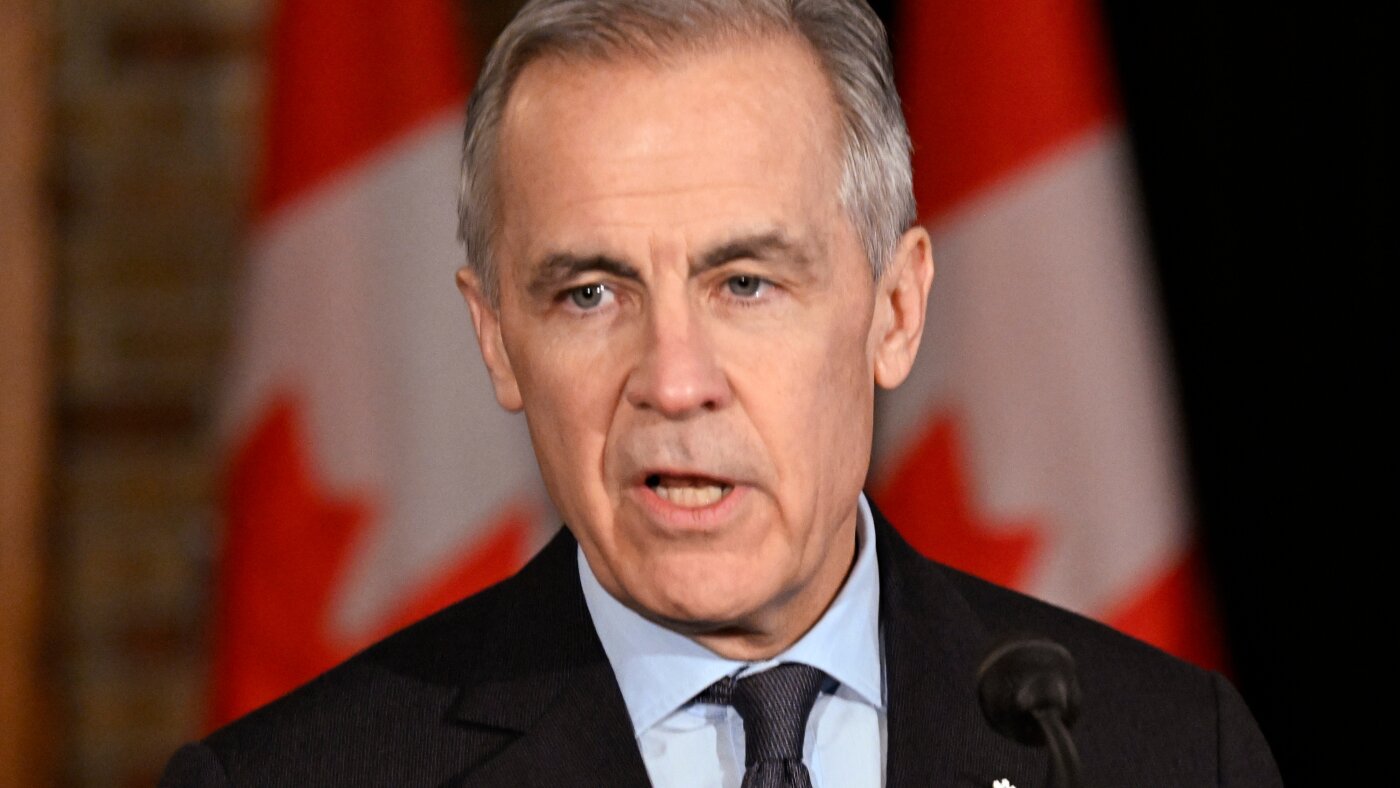

Tensions between the United States and Canada escalated this week as President Donald Trump warned of imposing steep tariffs on Canadian imports if the country pursues closer trade ties with China. His comments mark the latest flare-up in a series of trade disputes between the two neighbors.
President Trump’s recent statements have raised concerns over the stability of North American trade relations. Speaking on his social media platform, Truth Social, Trump suggested that Canada risks severe economic consequences if it allows Chinese goods to flow into the U.S. via Canadian markets. He warned that a trade agreement between Canada and China could “completely devour” Canadian businesses and disrupt the country’s social and economic framework. Trump’s tone was confrontational, referring to Canadian Prime Minister Mark Carney mockingly as “governor,” a nickname he previously applied to former Prime Minister Justin Trudeau.
This hardline stance represents a reversal from earlier remarks in January, when Trump indicated he viewed potential trade deals between Canada and China more favorably. On January 16, he told reporters that securing a deal with China would be positive. However, his latest posts suggest growing frustration and a desire to assert leverage over Canada’s trade policy.
Escalating trade tensions
Recent tensions stem from new interactions between Canada and China. Carney held talks with Chinese President Xi Jinping to forge a strategic partnership designed to broaden economic collaboration. Under this arrangement, tariffs on Chinese electric vehicles shipped to Canada would be relaxed, while annual import limits would permit up to 49,000 EVs. China, in turn, is preparing to scale back duties on Canadian agricultural goods such as canola, lobster, and peas later this year.
While Trump’s threat cites “100% tariffs,” the specifics remain uncertain, as the White House has yet to outline the conditions that would activate such a policy, creating speculation and unease among both businesses and policymakers. Canada’s finance minister, Dominic LeBlanc, noted that the country is not seeking a free trade agreement with China, describing the latest conversations as efforts to address particular tariff concerns rather than steps toward broader economic integration. LeBlanc also highlighted the enduring partnership between Canada and the United States, pointing to their continued collaboration on economic and security fronts.
Observers note that Trump’s threats could be interpreted as a reaction to Canada’s growing visibility on the global stage. During the World Economic Forum in Davos, Carney warned that economic integration and supply chain dependencies are increasingly used as leverage by more powerful nations. He framed these developments as a potential “rupture” in global trade, urging middle powers to collaborate to protect their interests. Some analysts suggest Trump’s statements are intended to counterbalance Carney’s high-profile positioning at Davos, following the U.S. president’s unsuccessful effort to negotiate Greenland-related tariffs.
Ambiguous outcomes for North American commerce
If enacted, 100% tariffs on Canadian imports could have significant implications for both economies. Previous Trump-era tariffs on steel, aluminum, autos, lumber, and energy products already strained trade between the two countries, contributing to economic challenges in Canada. October data showed Canada’s unemployment rate reached a nine-year high, while U.S. businesses faced declining exports to Canada, including a sharp drop in American spirits.
Experts caution that such a measure could violate the United States-Mexico-Canada Agreement (USMCA), which governs trade between the three nations. The agreement allows countries to terminate arrangements if one engages in trade with non-market economies like China, but experts suggest Trump’s latest threat may not have legal standing. Erica York, vice president of federal tax policy at the Tax Foundation, noted that imposing tariffs on Canada at a higher rate than China could disrupt trade norms and worsen economic uncertainty.
Analysts also point out the unpredictable nature of Trump’s tariff threats. The term “TACO,” or “Trump Always Chickens Out,” has been applied by investors to past instances where announced tariffs were not ultimately enforced. Despite this, the announcement alone contributes to market volatility and underscores concerns about the current reliability of U.S. trade policy.
Political and Economic Landscape
The backdrop to these tensions includes broader disputes over trade strategy and international relations. Trump has previously threatened tariffs against multiple European nations, framing them as leverage to achieve political or economic objectives. In some cases, such threats have been rescinded after preliminary agreements were reached, highlighting the transactional and reactive nature of recent U.S. trade policy.
Trump’s recent comments have also been entangled with personal rhetoric aimed at Canada’s leadership. In Davos, he asserted that Canada’s economic vitality depends on the United States, prompting Carney to counter that Canada thrives independently. These exchanges reflect not only trade disagreements but also the interpersonal dynamics that often shape international negotiations under the Trump administration.
The U.S. Supreme Court is expected to decide soon whether Trump can rely on emergency powers under the International Emergency Economic Powers Act to impose tariffs, although several justices have voiced doubts about using this statute for trade actions because it does not specifically address tariffs; the forthcoming ruling may delineate the extent of presidential authority in trade policy and influence the near-term direction of U.S.-Canada economic relations.
Trump’s threat to levy a 100% tariff on Canadian imports highlights the persistent instability shaping international commerce, revealing how political maneuvering and economic strategy remain tightly connected, and although the final consequences are still uncertain, both nations continue to track developments closely as they balance domestic economic priorities with the wider forces of global trade.
As Canada navigates its relationship with both the U.S. and China, the situation highlights the challenges faced by middle powers in maintaining sovereignty while engaging with larger economic players. The coming weeks may determine whether these threats materialize or remain another episode in the unpredictable realm of international trade policy under the Trump era.


