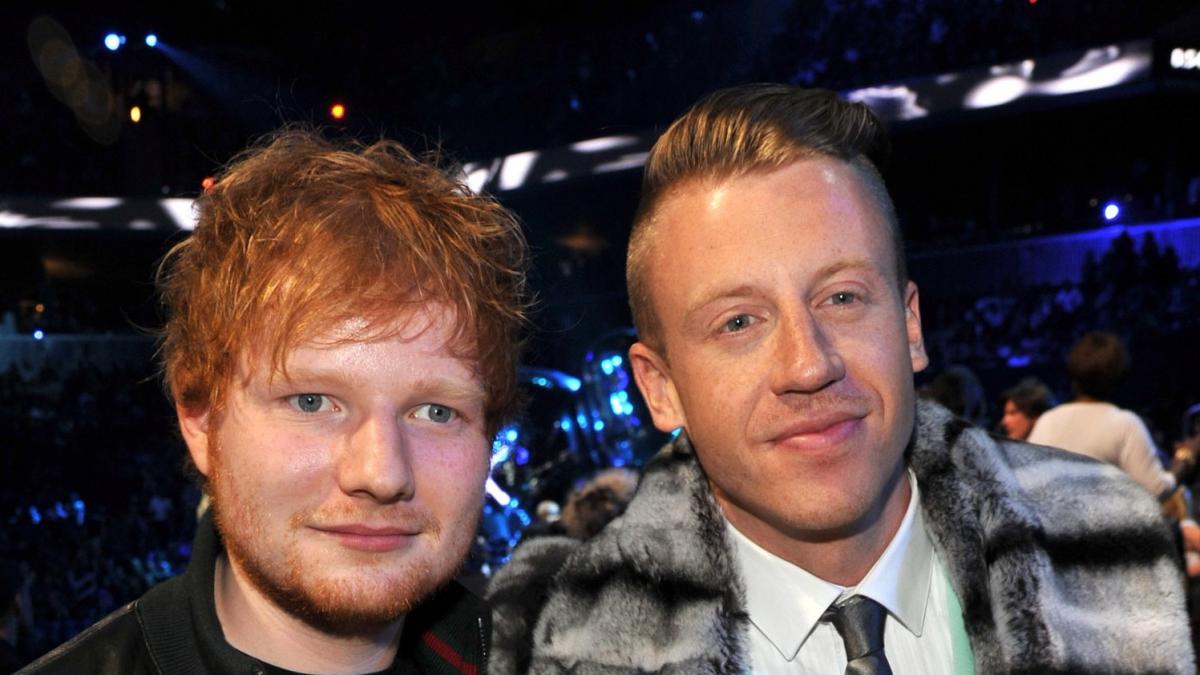

Ed Sheeran used his Philadelphia concert to address the controversy surrounding his US tour, apologizing for decisions he said he had struggled with while also speaking about the devastation in Gaza and the debate over political expression in music.
Sheeran addresses the controversy on stage
Ed Sheeran opened his Saturday night performance in Philadelphia with an unusually personal explanation to the audience.
Instead of diving straight into his customary performance, the British singer-songwriter addressed the dramatic circumstances surrounding his concert series over the past seven days. Tension escalated following the exclusion of rapper Macklemore from the American leg, alongside the departure of multiple supporting acts—such as Irish folk ensemble Beoga—who pulled out of the itinerary in an act of solidarity.
Standing alone on the stage at Lincoln Financial Field, Sheeran acknowledged that he had faced difficult choices and apologized to fans who may have been disappointed by how the situation unfolded.
“I’ve had to take and make difficult decisions and I am making mistakes,” Sheeran told the audience, adding that he was “so, so sorry.”
The remarks represented his most direct public response to the controversy since an Instagram statement earlier in the week in which he reiterated his preference for keeping politics separate from his concerts.
Sheeran clarified that he had never aspired to gain recognition as an activist musician. Nonetheless, he mentioned that the controversy thrust him right into the heart of a much wider dialogue concerning freedom of speech alongside the tensions dividing Israel and Hamas.
His remarks followed a stretch of several days during which the roster for his American tour underwent notable modifications. Macklemore had been lined up to perform as a supporting act, yet his involvement concluded following public remarks voicing backing for Palestinians. Following this, additional artists withdrew from the tour.
The changes transformed what had been a conventional stadium tour into a subject of wider discussion about the relationship between music, political expression and the responsibilities of artists working with large commercial events.
Sheeran speaks about Israel, Gaza and civilian suffering
After addressing the controversy surrounding his tour, Sheeran turned his attention directly to the war in the Middle East.
He condemned the Hamas-led attack on Israel on October 7, 2023, describing the violence, including the attack at the Nova music festival, as horrific. Hamas militants killed approximately 1,200 people and took more than 250 hostages during the attack, according to widely reported figures.
Sheeran then spoke about the fallout from the conflict in Gaza, where a military offensive was initiated by Israel in the wake of the October 7 attacks.
The singer described the scale of destruction and civilian deaths as catastrophic and said he believed the suffering had become unjustifiable and disproportionate. He also expressed concern about the deaths of children and referred to what he described as systemic injustice in the West Bank.
His comments stood out as they shifted away from his previous claims that he wished to keep his concerts free of politics. Rather, Sheeran sought to clarify his stance while underscoring that his performances aimed to embrace attendees holding diverse perspectives.
He stated to the Philadelphia audience that individuals holding conflicting viewpoints should still manage to stand shoulder to shoulder and partake in the shared experience of listening to music.
For Sheeran, that principle appeared to be particularly important after a week in which political disagreements had affected the lineup of his tour.
He described his concerts as spaces where everyone should feel welcome and said that maintaining that environment mattered greatly to him.
The vocalist’s remarks failed to eliminate the controversy regarding Macklemore’s exit, yet they offered a more transparent insight into Sheeran’s perspective on the matter. Instead of positioning himself as a supporter of a single political agenda, he underscored the human toll of the dispute, contending that individuals holding opposing views should nonetheless be welcome at the same musical event.
Macklemore’s remarks ignited the controversy
Macklemore’s participation in the controversy traces back to his live sets during Sheeran’s concert series.
The rapper, who became internationally known through songs including “Thrift Shop,” has been an outspoken supporter of Palestinian rights since the war in Gaza began. During an earlier performance at MetLife Stadium in New Jersey, he appeared wearing a black-and-white keffiyeh and used his time on stage to speak about Palestine.
Macklemore explained that one of the main motivations behind his decision to join the tour was gaining the chance to speak to massive stadium crowds regarding the Palestinian struggle.
He also performed “Hind’s Hall,” a track tied to his opposition to the war and his backing for Palestinians.
During his address, Macklemore sought to differentiate between taking issue with the Israeli government alongside its strategies and holding prejudice against Jewish individuals. He noted that condemning Israel’s behavior, or labeling it as apartheid or genocide, ought not to be misconstrued as an attack on the Jewish community at large.
The comments attracted significant attention and became increasingly controversial as the tour continued.
Macklemore was subsequently removed from the remaining US dates. Sheeran later clarified that the decision was not his and that the choice had been made by the tour’s promoters.
That explanation, however, did not end the debate. Instead, it raised questions about how much freedom performers have to make political statements when appearing as part of another artist’s tour.
The situation is further complicated because large-scale concert tours involve a multitude of stakeholders. Artists, talent management firms, promoters, arenas, and corporate sponsors often possess conflicting priorities and duties, meaning that choices concerning the lineup are not exclusively determined by the headline act.
Consequently, Sheeran’s involvement in the dispute faced intense scrutiny even subsequent to his assertion that dropping Macklemore was beyond his control.
Other artists also left the tour
The modifications did not conclude with Macklemore.
Beoga, the Irish folk group that had been part of Sheeran’s touring lineup, also left in solidarity. Other performers associated with the tour followed, further altering the scheduled opening acts and creating a different atmosphere around Sheeran’s US performances.
The departures underscored the extent to which the disagreement had moved beyond a dispute between two individual musicians.
The situation additionally brought to light a wider dilemma across the entertainment sector: namely, whether performers ought to leverage commercially arranged gigs for voicing political stances, and how promoters should react when such declarations spark public debate.
Political advocacy has progressively turned into a core element of Macklemore’s public persona. Conversely, a different path has typically defined Sheeran’s journey. Rather than sustained political activism, his professional trajectory has been primarily shaped by his music and intimate storytelling.
That difference in approach helps explain why the controversy became particularly complicated once the two musicians were placed on the same tour.
Ed Sheeran’s remarks during his Philadelphia show implied that he sought to strike a balance. While he recognized the gravity of the conflict alongside the humanitarian crisis unfolding in the area, he simultaneously upheld the notion that his musical performances ought to stay inclusive for individuals holding opposing political views.
Philadelphia fans arrived with different expectations
The discussion extended far beyond the circle of artists and event planners.
Thousands of people arrived at Lincoln Financial Field for Sheeran’s Philadelphia concert, with many fans attending with families and young children. Some concertgoers said they were disappointed that Macklemore would not perform but still wanted to see Sheeran.
Others were more conflicted about attending because of the controversy surrounding the tour.
Some fans said they understood Macklemore’s support for Palestinians but hoped the Philadelphia performance would remain focused primarily on music. Others questioned Sheeran’s handling of the situation and considered changing their plans.
The range of reactions demonstrated how differently members of the audience viewed the controversy.
Outside the stadium, a smaller group of pro-Palestinian demonstrators gathered before the concert. Participants waved Palestinian flags, played drums and trumpets, and chanted slogans calling for Palestinian freedom.
The demonstration remained peaceful and was part of a broader effort by pro-Palestinian organizations to keep attention on the situation in Gaza.
Inside the venue, meanwhile, Sheeran sought to shift the emphasis back to the music and the collective experience of the live show.
The vocalist subsequently admitted that the vibe felt distinct from a standard concert. At a certain moment throughout the performance, he clarified that he opted against utilizing a more compact platform situated amidst the audience due to his anxiety regarding potential projectile items being hurled in his direction.
That decision illustrated how the controversy had affected the atmosphere of the event, even though the concert itself continued.
The ongoing debate surrounding artists and political expression
The situation involving Sheeran and Macklemore reflects a broader discussion that has repeatedly emerged in the music industry.
Throughout history, musicians have leveraged live performances to voice opinions concerning conflicts, civil rights, electoral campaigns, and broader social causes. Concurrently, crowds do not always align with these perspectives, compelling organizers to weigh the practical fallout of permitting political commentary during large-scale commercial gatherings.
Certain artists might view keeping quiet about matters they consider critical to existence as a political choice in its own right. Conversely, live shows are meant to offer relief from political divisions for others, keeping the spotlight strictly on the music.
Ed Sheeran’s remarks in Philadelphia seemed to acknowledge both points of view.
He did not attempt to deny the political nature of the dispute. Instead, he spoke about the human suffering caused by the conflict and argued that people with opposing political positions should still have space to attend the same concerts.
That position also explains why his apology was significant. Sheeran acknowledged that his decisions had consequences and that he had not handled every aspect of the situation perfectly.
His remarks marked a shift from his earlier emphasis on keeping politics away from his shows toward a more direct acknowledgment of the political and humanitarian circumstances surrounding the tour.
At the same time, he kept championing the ideal that his musical performances ought to be accessible to all.
What happens next for Sheeran’s tour
The Philadelphia concert marked an important moment in the controversy because it gave Sheeran the opportunity to speak directly to the people most affected by the situation: his audience.
His comments did not resolve the disagreement over Macklemore’s departure, nor did they settle the larger debate about political speech in music. Instead, they clarified Sheeran’s own position after several days of uncertainty.
Macklemore has persistently kept up his public advocacy on behalf of Palestinians. Subsequent to being dropped from the lineup, he additionally announced his intention to channel $1 million out of his earnings tied to the tour toward charities delivering humanitarian aid to Palestinians.
Sheeran, in the meantime, confronts the obstacle of pressing ahead with his concert series while balancing the demands of followers who hold starkly contrasting perspectives on the dispute.
The episode has demonstrated how quickly a statement made during a concert can become part of a much larger public debate. In an era when performances are recorded and distributed across social media almost immediately, artists’ comments can reach audiences far beyond the people inside a stadium.
For Sheeran, the Philadelphia performance became an opportunity to acknowledge the controversy rather than avoid it. His message centered on the devastation caused by the conflict, the importance of allowing different perspectives and his desire for his concerts to remain spaces where people can share music despite their political disagreements.
The dispute surrounding his tour is therefore about more than the removal of one opening act. It has become a case study in the difficult balance between artistic expression, commercial partnerships, audience expectations and the role musicians choose to play when confronting major international events.