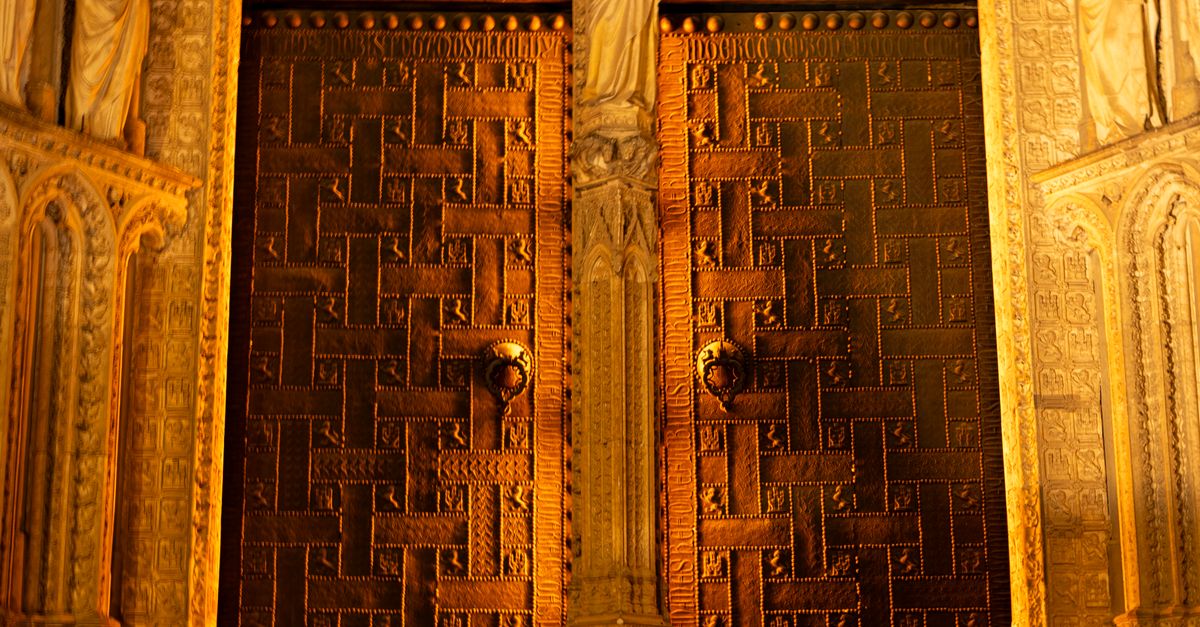

1. Cologne Cathedral, Germany
Construction of Cologne Cathedral began in 1248 and was not officially completed until 1880—more than 630 years later. Designed in the High Gothic style, it was intended to house relics of the Three Kings and to rival the great French cathedrals. Work halted in the 16th century due to financial shortages and changing artistic tastes during the Renaissance. For over 300 years, an enormous crane stood atop the unfinished south tower as a symbol of abandonment. In the 19th century, renewed national pride and access to original medieval plans led to its completion. Today, its twin spires rise 515 feet, making it one of the tallest cathedrals in the world and a UNESCO World Heritage Site.
2. Milan Cathedral, Italy
Ground was broken on Milan Cathedral in 1386, yet the last details were not finished until 1965. Over nearly six centuries, architects, sculptors, and engineers contributed to its evolving Gothic design. Political shifts, including Napoleonic influence in the early 19th century, accelerated parts of the façade’s completion. Built primarily from white marble, the cathedral features more than 3,400 statues and 135 spires. Its prolonged construction reflects the interplay between civic ambition, artistic transformation, and technological advancement across generations.
3. Seville Cathedral, Spain
Built upon the grounds of an ancient mosque, construction on Seville Cathedral kicked off in 1401 and reached completion mostly by 1506, although enhancements and alterations persisted for ages. The evolution of the minaret into the Giralda bell tower stands as a testament to this cultural shift. Structural failures, such as the collapse of the dome in 1511, necessitated reconstruction and fresh architectural designs. Ultimately, the cathedral grew into one of the globe’s premier Gothic houses of worship, mirroring the escalating might of Spain throughout the Age of Exploration.
4. St. Peter’s Basilica, Vatican City
Although technically a basilica rather than a cathedral, St. Peter’s Basilica stands as one of the most prolonged and ambitious ecclesiastical projects in history. Construction began in 1506 and concluded in 1626, spanning 120 years. Designed by masters including Bramante, Michelangelo, and Bernini, its evolving Renaissance and Baroque features illustrate changing artistic leadership. The immense dome, completed in 1590, became an architectural model across Europe. Financial strains associated with its construction also played a role in sparking the Protestant Reformation.
5. Florence Cathedral, Italy
Construction on Florence Cathedral was initiated in 1296, though its legendary dome remained unfinished until 1436. Meanwhile, the main facade reached completion solely during the 19th century. Engineering a cupola of such colossal proportions—entirely lacking conventional timber scaffolding—presented the ultimate hurdle. This engineering dilemma was ultimately overcome by Filippo Brunelleschi’s groundbreaking double-shell cupola design, which ultimately signaled a watershed moment for Renaissance architecture. Ultimately, the basilica’s protracted construction schedule reflects the evolution of Florence from a medieval municipality into a formidable Renaissance center.
6. Notre-Dame Cathedral of Paris, France
Construction of Notre-Dame Cathedral commenced in 1163 and reached near completion by 1345, spanning nearly two hundred years. Ongoing repairs, restorations, and rebuilds—most famously during the 19th century directed by Eugène Viollet-le-Duc—further prolonged its evolution. The cathedral’s ribbed vaults, flying buttresses, and sculptural works highlight the progression of Gothic style. Moreover, the blaze of 2019 and the subsequent ongoing reconstruction efforts illustrate how such iconic monuments persist as enduring, ever-evolving endeavors through the ages.
7. York Minster, England
Although termed a minster, York Minster functions as a cathedral and required approximately 250 years to complete, from 1220 to 1472. Built in stages, its architectural style evolved from Early English Gothic to Perpendicular Gothic. The Great East Window, completed in 1408, remains one of the largest expanses of medieval stained glass in the world. Political upheavals, including the Wars of the Roses, slowed progress, yet the structure emerged as a defining symbol of northern England.
8. Chartres Cathedral, France
Chartres Cathedral was constructed primarily between 1194 and 1220 after a devastating fire, yet earlier foundations date back centuries, and its north spire was completed in the 16th century. This layered timeline stretches its development across more than 400 years. Known for its remarkably preserved stained glass and harmonious Gothic proportions, Chartres exemplifies how rebuilding after catastrophe often required generational commitment.
9. Barcelona Cathedral, Spain
Construction of Barcelona Cathedral began in 1298 and continued for roughly 150 years, though its neo-Gothic façade was not completed until 1913. Funding depended heavily on donations from merchants and guilds, leading to intermittent progress. The cloister, completed in the 15th century, houses thirteen white geese symbolizing the martyrdom of Saint Eulalia. Its extended completion highlights the economic dependencies of medieval urban projects.
10. Cathedral of Saint John the Divine, United States
The Cathedral of Saint John the Divine in New York City began construction in 1892 and remains technically unfinished. Designed in Romanesque Revival style before shifting to Gothic Revival, its progress was interrupted by world wars, financial crises, and changing architectural priorities. With a length of 601 feet, it is among the largest cathedrals in the world. Its ongoing construction reflects modern challenges in sustaining monumental religious architecture.
Why Did These Cathedrals Take So Long?
- Financial constraints: Work stoppages were frequently triggered by a heavy reliance on donations, royal patronage, or church funds.
- Political instability: Resources were routinely diverted elsewhere due to wars, revolutions, and shifts in government.
- Technological limitations: Engineering hurdles demanded fresh innovations or total redesigns.
- Changing artistic styles: As aesthetic preferences shifted, projects were often modified midway through construction to match the times.
- Natural disasters: Rebuilding efforts became mandatory following fires, structural collapses, and earthquakes.
These cathedrals stand not merely as architectural achievements but as chronicles in stone. Their walls record centuries of ambition, faith, conflict, and creativity. Each prolonged construction tells a story of persistence across generations, revealing how monumental architecture transcends the lifetimes of its builders. Through evolving styles and enduring craftsmanship, these structures embody the passage of time itself, reminding us that some of humanity’s greatest works are shaped not by years, but by centuries.