
The Enduring Relevance of Chaplin’s ‘The Great Dictator’
Historical Context and Artistic Courage
‘The Great Dictator’, released in 1940, stands as one of Charlie Chaplin’s most daring works, both artistically and politically. Set during an era marked by growing fascism in Europe, the film was Chaplin’s first true sound picture, entering the talkie era with a profound statement. While much of Hollywood practiced caution concerning European dictators for fear of diplomatic fallout or censorship, Chaplin audaciously satirized Adolf Hitler, Benito Mussolini, and the toxic machinery of totalitarianism. This was monumental at a time when the full scope of the Holocaust and Nazi atrocities remained obscured to much of the global public.
Chaplin’s portrayal of two contrasting figures—Adenoid Hynkel, Tomainia’s merciless tyrant, and an ordinary Jewish barber—enabled him to weave together physical humor, political satire, and sharp critique alongside a deep emotional current of compassion. Far more than a mere comedic trick, this double performance served as a mirror to the precarious and shifting limits dividing tyranny from human dignity.
Political Satire and Timeless Warnings
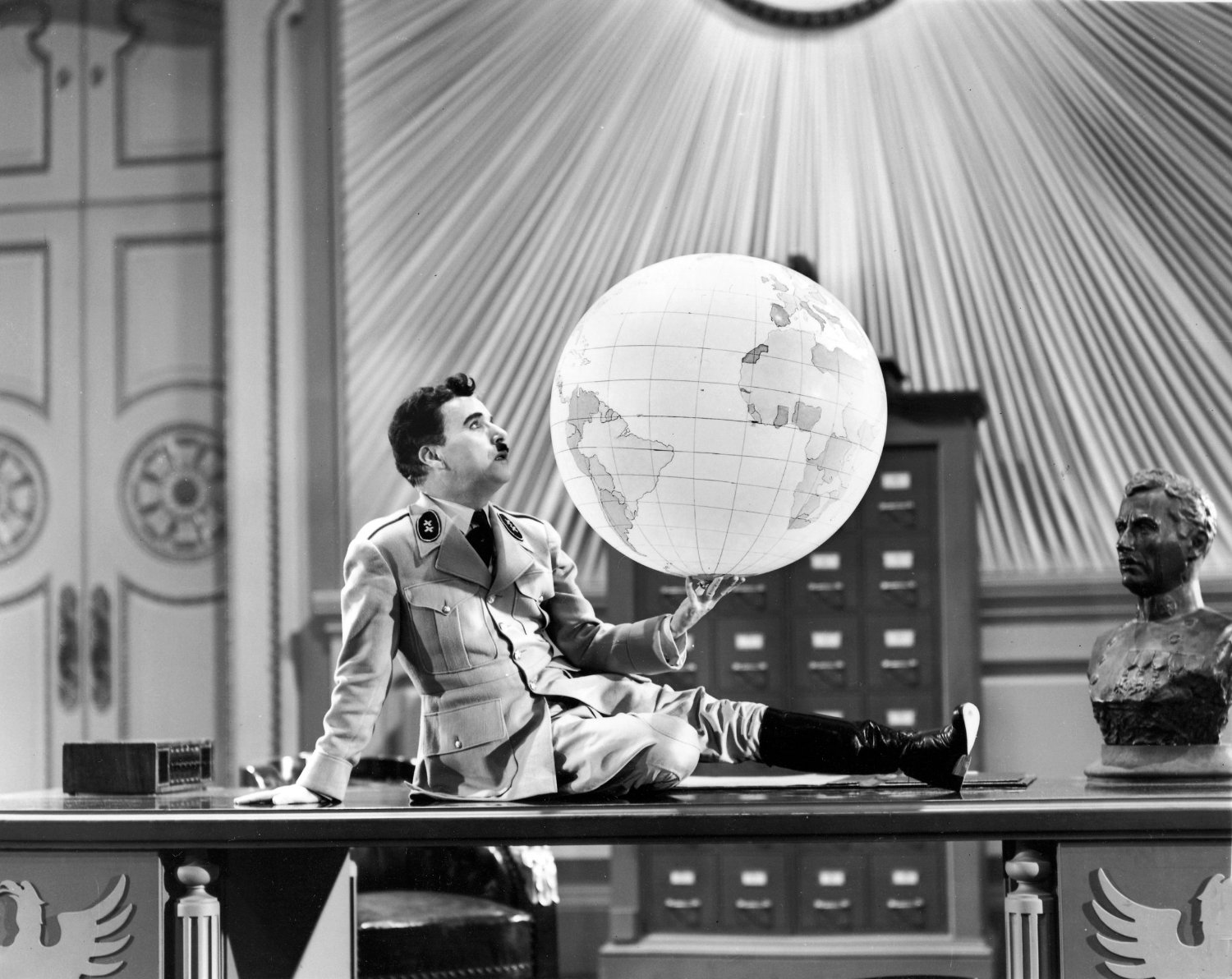
The movie’s significance is rooted in its sharp satire and prophetic cautions. By ridiculing the pompous rhetoric and hollow symbolism typical of despots, Chaplin laid bare the ridiculousness driving fascist governments. The celebrated globe-dance sequence, where Hynkel cradles and juggles a balloon-like Earth, stands as a triumph of visual metaphor, vividly illustrating both the tyrant’s delusions of absolute power and the terrifying vulnerability of global peace.
Aside from its humor, the screenplay is interwoven with cautions that outlast its era. Remarks made by the dictator or his underlings resonate across generations, much like the unthinking crowds applauding state messaging or engaging in witch hunts. Chaplin’s biting wit serves to caution contemporary and upcoming viewers regarding how swiftly civilizations, cloaked in pretexts of might or righteousness, can plunge into brutality and oppression.
Today, researchers and sociopolitical analysts frequently reference ‘The Great Dictator’ when examining the revival of autocratic rhetoric, media control, and dehumanizing messaging. Its portrayal of persuasion’s influence—boosted by broadcasts, banners, gestures, and catchphrases—parallels modern digital-age anxieties concerning fake news and the rapid decay of public debate.
The Humanist Speech: A Cinematic and Ethical Touchstone
The film’s legendary final speech has entered the canon of not only film history but also political rhetoric. In the persona of the barber, mistaken for the dictator, Chaplin delivers an impassioned plea against hatred and greed, advocating for empathy and goodwill across all nations and races. The climactic speech is a radical pivot from satire to earnestness, resonating far beyond cinema audiences.
Across the globe, academic establishments and teachers have leveraged the address to emphasize the imperative of democratic principles, tolerance, and the defense of personal liberties. Particularly during periods of worldwide instability, Chaplin’s message has been excerpted and shared across digital platforms, cited during demonstrations, and alluded to by political leaders. This occurrence highlights the motion picture’s dynamic influence as a work of art and a moral guide.
Influence on Cinematic and Social Discourse
Chaplin’s blending of humor and pathos in ‘The Great Dictator’ has inspired generations of filmmakers—from Stanley Kubrick’s black comedy in ‘Dr. Strangelove’ to satirical political works by Mel Brooks and Sacha Baron Cohen. The technique of using satire to address grave issues has proliferated across film, theater, and television, as creators recognize the power of humor to both disarm and inform.
Beyond its artistic impact, the movie ignited intense discussions concerning the duty artists bear during crises. Ought humor challenge tyranny or offer an escape? By making a courageous decision, Chaplin established a standard that encouraged fellow creators to tackle political truths instead of hiding from them. Through film retrospectives, analytical essays, and incorporation into academic curricula, ‘The Great Dictator’ persistently sparks conversations regarding where amusement, social engagement, and morality intersect.
Modern Parallels and Legacy
With recurrent waves of nationalist fervor, bigotry-fueled violence, and the urge to scapegoat marginalized groups, ‘The Great Dictator’ resonates far past its debut era. Its critiques regarding unthinking obedience and dishonesty stay pertinent across communities grappling with social division and the weakening of democratic protections. The movie’s humanitarian heart—its faith that everyday compassion can outlive despots—offers an alternative message just as crucial today as back in 1940.
As long as power is abused, and human dignity is threatened by the machinery of hate, Chaplin’s cinematic warning preserves its urgency. ‘The Great Dictator’ stands not just as an artifact of its time, but as a living challenge, reminding audiences that laughter and conscience, when coupled, can serve as formidable defenses against cruelty.