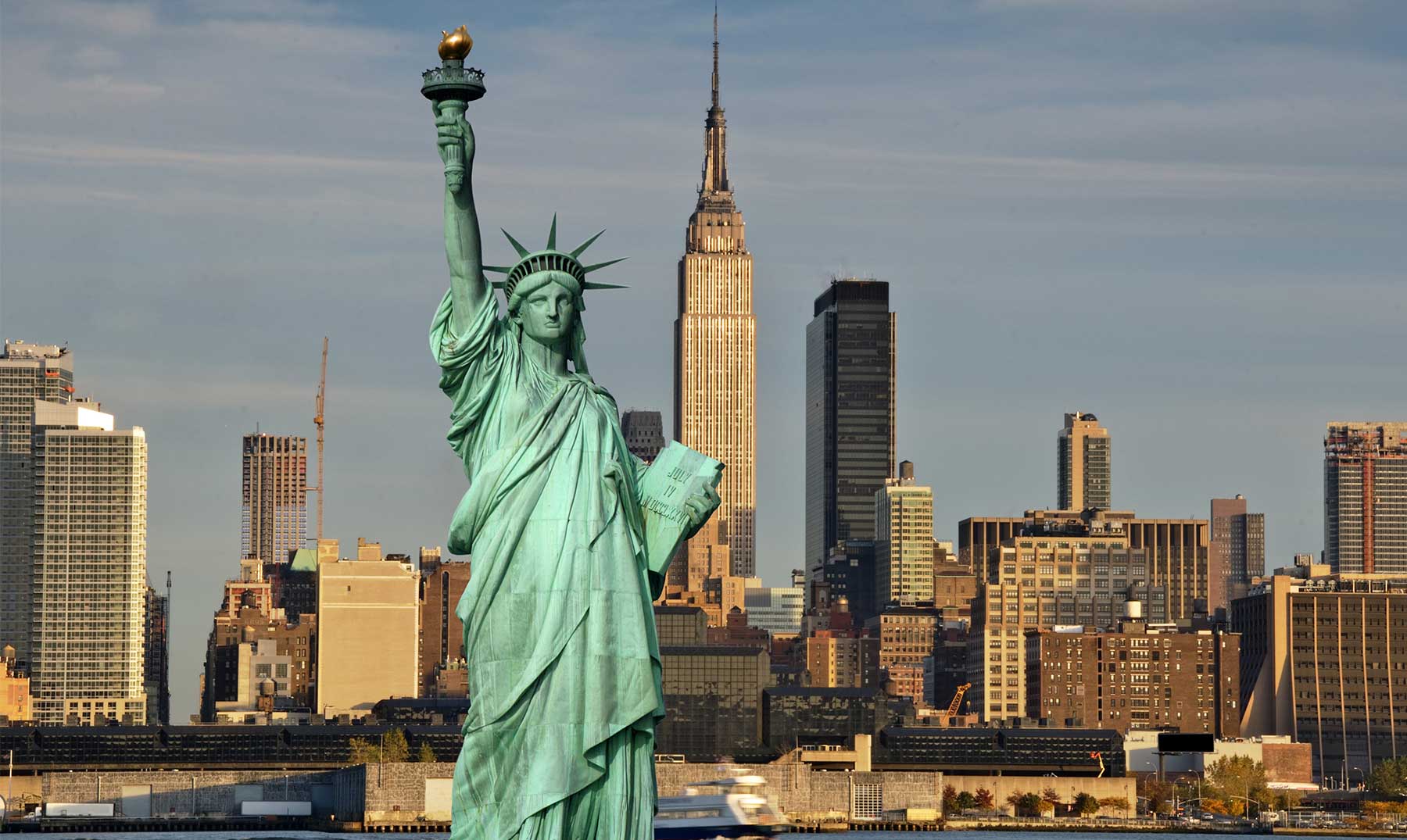

A prominent presence on Liberty Island, the Statue of Liberty has motivated generations with her torch held high and her serious look over the harbor. Though she has traditionally been a symbol of freedom and hospitality, in modern American cultural discussions, she represents more than just a historical landmark. She embodies intricate and frequently opposing concepts that mirror the country’s profound struggles—an icon whose importance both brings together and separates as the United States navigates its sense of identity.
Initially, the Statue of Liberty symbolizes principles that are cherished by many Americans: freedom, democracy, and the chance for a fresh start. Her official title, “Liberty Enlightening the World,” and the well-known poem engraved at her base emphasize that message. Immigrants who arrived in New York historically looked up to her as a beacon, and throughout various periods, Americans have seen her as a symbol of national dreams. However, in contemporary times, the statue also serves as a platform for discussions regarding who qualifies as an American, the nation’s obligations, and the type of society it should develop into.
In recent years, the statue has become entangled in disputes about immigration. Supporters of more inclusive border policies often point to her as symbolic support for the stranger and the newcomer—echoing Alfred Lord Tennyson’s famous line about carrying “the wretched refuse of your teeming shore.” In their eyes, she calls America to uphold its welcoming heritage. For others, however, invoking Lady Liberty in such contexts is seen as selective or simplistic. Critics argue that structural realities and laws matter more than poetic sentiment. For them, the statue remains inspirational, but not definitive guidance for policy.
Yet the symbolic contest extends beyond immigration. In discussions about racial justice, some view the statue as a reminder that freedom ought to be universal—even as they acknowledge that America’s history has long fallen short of that ideal. In other contexts—debates over national memory, civic education, or expressions of patriotism—the statue becomes a litmus test. How she is taught in schools, portrayed in media, or featured in public ceremonies can signal broader cultural alliances.
Complicating matters further, the statue’s symbolism is elastic by design. Created in France and gifted at a moment when the U.S. and French republics celebrated shared republican ideals, it has always served dual purposes—as welcome to immigrants and as tribute to enlightenment values. Over time, successive generations have reshaped her meaning. In one era, she heralded industrial age progress; in another, she stood for anti-war sentiment or civil rights. Today, she endures as a touchstone precisely because she resists being pinned down.
This adaptability, nevertheless, has caused discomfort. When influential entities adopt her image to support political stances, some individuals feel marginalized or inaccurately depicted. For instance, when businesses use her likeness in branding, detractors argue that revered public symbols are being commercialized. When politicians associate with her heritage, adversaries might perceive it as a strategic act instead of a sincere dedication. Every reference modifies her significance, adding new, occasionally conflicting, interpretations.
And yet, Lady Liberty continues to unite more often than divide. Public response to threats against her—from vandalism to rising tides of indifference—often reveals a shared impulse to protect heritage. Educational programs, art projects, and civic ceremonies still revive her relevance for younger audiences. Her image endures in popular culture, and many Americans still find in her a reflection of hope and aspiration.
In this sense, the statue mirrors the country itself: a composite of ideals, struggles, and ambitions. Her multi‑faceted symbolism reveals more about the evolving shape of American values than about the statue alone. The culture wars in which she features so prominently are ultimately disputes over meaning—what America once was, what it is today, and what it ought to become.