
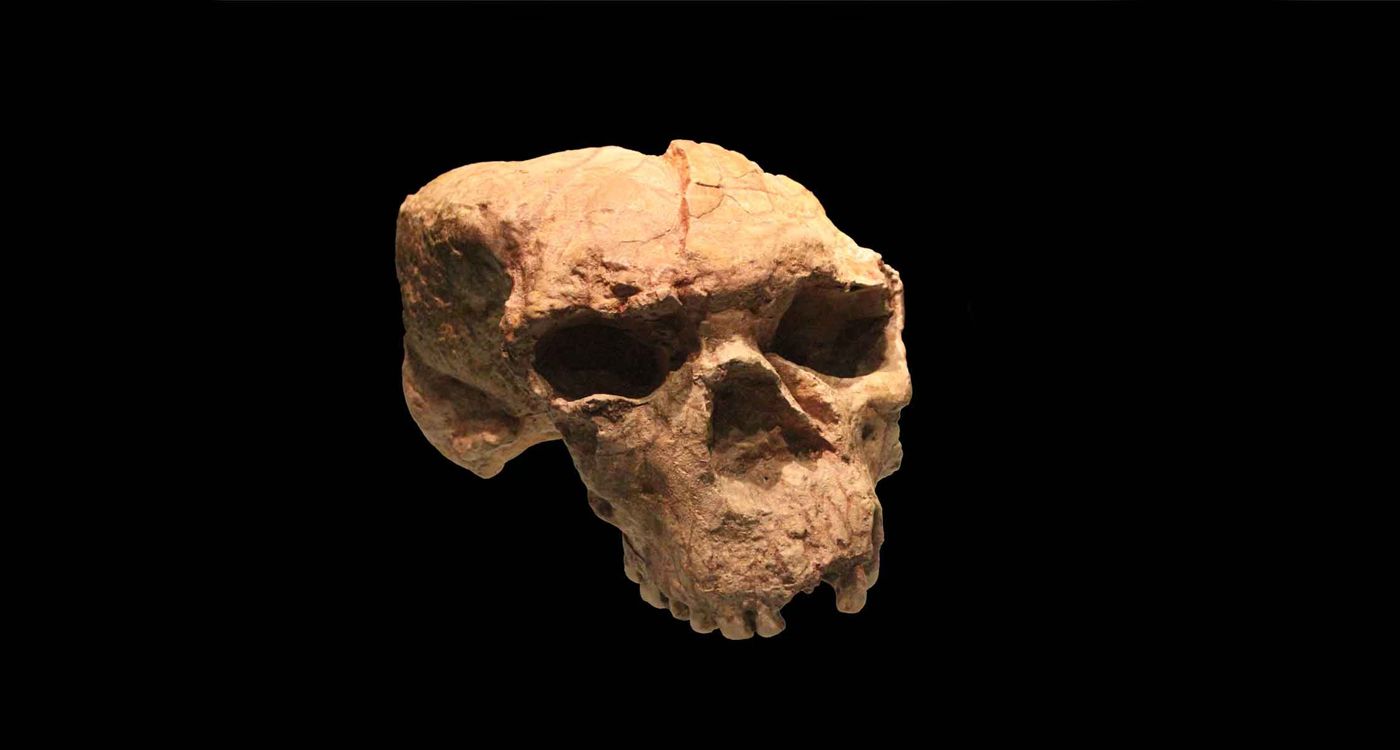

A significant fossil discovered in China is compelling researchers to reevaluate longstanding beliefs regarding the timeline of human evolution.
A recent archaeological find in China has drawn the interest of the worldwide scientific community. Scientists have discovered a remarkably well-preserved human skull that displays a mix of ancient and modern traits, questioning earlier theories on the timeline and processes of human evolution. This discovery provides a rare insight into the complex network of hominin species that existed tens of thousands of years ago, indicating that human evolution may have been significantly more complex than previously believed.
The finding and its importance
The skull was excavated from a cave site in southern China, where layers of sediment have preserved remains from multiple periods. Preliminary dating techniques indicate that the fossil could be significantly older than comparable specimens found in other parts of Asia. Its unique morphology—featuring traits seen in both archaic humans and anatomically modern Homo sapiens—suggests that different human populations may have coexisted and interbred far earlier than scientists had believed.
Experts believe that this discovery has the potential to alter a segment of the evolutionary history. Conventional models typically illustrated a straight line from early species to contemporary humans, yet the Chinese cranium supports the concept of a branching, mosaic evolution. These findings suggest a more dynamic evolution, where groups evolved simultaneously and shared genetic information across different areas.
The implications extend beyond academic debate. By revealing a broader spectrum of human diversity in ancient Asia, the fossil challenges assumptions about migration, adaptation, and survival strategies during the Pleistocene epoch. It highlights how local environments influenced evolutionary outcomes and underscores the importance of East Asia as a center of human development.
Insights into human diversity and adaptation
One of the most remarkable elements of the Chinese skull is the way its characteristics come together. Though certain details, like a well-defined brow ridge and strong facial structure, recall older human species such as Homo erectus, other attributes, like the form of the braincase and tooth patterns, are more similar to contemporary humans. This mix implies that evolutionary experimentation might have been widespread, with various groups keeping some ancient features while incorporating others beneficial for enduring.
The find also provides insight into adaptation strategies. Researchers hypothesize that environmental pressures in East Asia, such as fluctuating climates and diverse ecosystems, may have driven evolutionary innovation. Populations living in these regions would have needed to adapt to varying resources, predation risks, and social structures, resulting in the mosaic of features observed in the skull. This highlights the interconnected nature of biological evolution, environmental change, and cultural development.
Genetic analysis, once feasible, could further illuminate these patterns, potentially revealing evidence of interbreeding with other hominin species. Previous discoveries, such as Neanderthal and Denisovan DNA in modern populations, have demonstrated that gene flow between species was not uncommon. The Chinese skull may provide additional context, helping to map out the evolutionary relationships that shaped modern human diversity.
Reevaluating human migration and timelines
The discovery in China also prompts a reevaluation of human migration patterns. Conventional models often placed East Asia as a later arrival for modern humans migrating from Africa. However, the dating of this skull suggests that hominin populations may have reached the region earlier than assumed, interacting with local archaic species. This could mean that East Asia played a more central role in shaping human evolution than previously acknowledged.
Such a change in viewpoint carries extensive consequences. It implies that the evolution of humans wasn’t a straightforward, one-way journey but a web of groups adjusting and sharing characteristics over great distances. Migration instances, previously considered singular occurrences, may have included several waves of movement and intricate interactions, leading to a diverse mosaic of evolutionary history.
Archaeological context further supports these ideas. Tools, ornaments, and other cultural artifacts found near the fossil indicate that these populations possessed advanced skills and social structures. These findings challenge outdated notions that early humans in Asia were technologically or socially inferior to their African counterparts, reinforcing the idea that innovation occurred independently in multiple regions.
Wider influence on the study of evolution
This finding holds significant importance not just for comprehending human evolution in East Asia, but also on a worldwide scale. It underscores the necessity for more archaeological exploration in areas that have received less attention compared to Africa and Europe. Every new fossil, artifact, or genetic sample can potentially alter the narrative of human history, emphasizing to researchers that the tale of our species is much more complex than a straightforward, linear journey.
Moreover, this discovery promotes cross-disciplinary cooperation. Paleoanthropologists, geneticists, and archaeologists are joining forces to create a clearer understanding of human evolution. By merging fossil evidence with genetic information, scientists can gain a deeper comprehension of the timeline, variety, and survival strategies of ancient humans. This comprehensive method is likely to provide fresh perspectives that will keep questioning beliefs and ignite dialogue among scientific circles.
The Chinese skull discovery also serves as a reminder of the importance of preserving fossil sites. Rapid urbanization and industrial development in many parts of Asia threaten to destroy invaluable evidence of our past. Protecting these sites ensures that future generations of researchers can continue to uncover and study the complexity of human evolution.
As research continues, the Chinese skull may provide crucial data to fill gaps in the human evolutionary record. Advanced dating methods, high-resolution imaging, and DNA analysis could reveal more about the individual’s life, health, and ancestry, offering unprecedented insight into the interactions between different hominin populations.
This finding highlights that the evolution of humans is not a simple narrative but rather a complex tapestry of movements, adaptations, and links. Every new discovery enhances our understanding, indicating that the beginnings of humankind are intricate, intriguing, and still not completely uncovered. The fossil discovered in China strengthens the concept that East Asia played a crucial role in human evolution, requiring ongoing research, investigation, and conservation.
While researchers delve into this finding, it becomes evident that our comprehension of how humans have evolved is still developing. Each fossil discovery allows scientists to piece together a more detailed, complex, and globally connected story than ever thought possible. It appears that the narrative of human history is not yet finished, and this extraordinary skull is aiding in revising the yet untold chapters.


