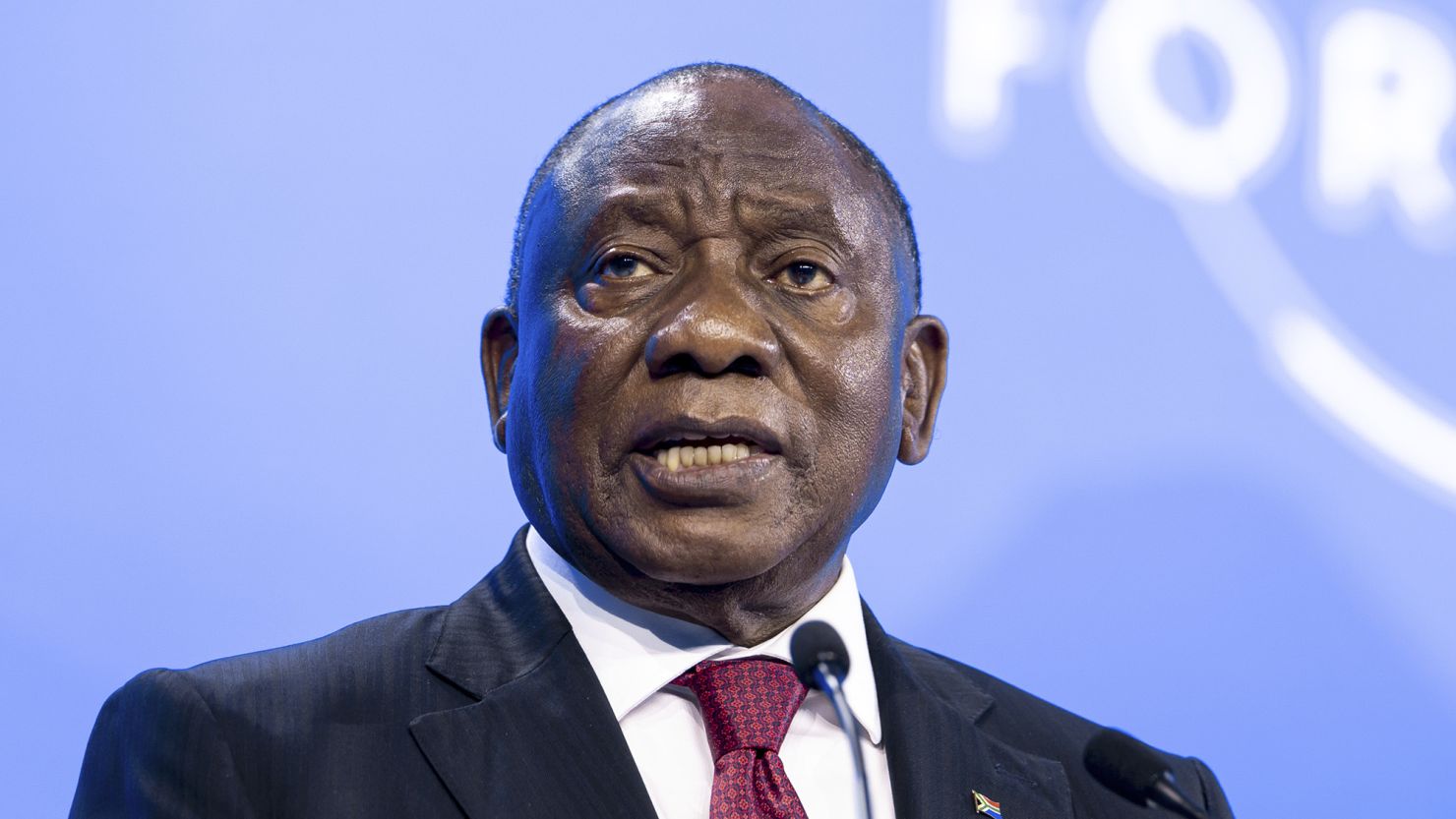

South Africa’s President, Cyril Ramaphosa, has publicly expressed his opposition to the proposed 30% tariff on South African goods, recently announced by former U.S. President Donald Trump. The tariff proposal, which forms part of a broader economic strategy linked to trade realignments, has raised concerns not only within South Africa but also among global trade observers who fear its potential impact on international relations and emerging market economies.
The proposed tariff, aimed specifically at South African exports to the United States, is part of Trump’s ongoing rhetoric emphasizing national self-interest and the protection of American industries. While the former president has defended the measure as necessary to correct what he describes as “unfair trade practices,” critics, including President Ramaphosa, have highlighted the disproportionate impact such actions could have on developing economies, particularly those reliant on trade with the United States.
In a recent announcement, Ramaphosa highlighted the significance of keeping trade routes open between South Africa and the U.S., pointing out that harsh tariffs pose a risk to both his nation’s economic development and the historically cooperative and mutually advantageous diplomatic relations. “South Africa has consistently aimed to interact with its trading partners sincerely,” Ramaphosa observed. “The implementation of high tariffs on our goods contradicts the values of equitable trade and partnership that our two countries have supported for a long time.”
The proposed tariffs target a range of South African goods, including metals, agricultural products, and manufactured items that form a crucial part of the country’s export economy. For South Africa, the U.S. represents a significant trading partner, and the potential imposition of a 30% tariff raises the specter of job losses, reduced investment, and economic instability at a time when the nation is striving to recover from the financial pressures of recent global challenges.
Economists have expressed their opinions on the possible outcomes, indicating that these tariffs might not only affect South Africa’s export industries but could also create a concerning standard for interactions between larger economies and emerging markets. A number of analysts believe that this action represents a trend toward protectionism, which might have wider consequences for international trade standards, whereas others propose that nations like South Africa should consider expanding their range of export markets to lessen the risks associated with these independent measures.
In his speech, Ramaphosa advocated for engaging in constructive conversations as the ideal method for settling trade disagreements. He highlighted South Africa’s dedication to a rules-based global trading framework, supported by organizations such as the World Trade Organization (WTO). He further stressed the importance of fair trade actions that acknowledge the disparities between developed and emerging economies.
El impacto potencial de las tarifas propuestas va más allá de la economía. Analistas advierten que las tensiones comerciales podrían poner en riesgo la relación diplomática entre las dos naciones, la cual históricamente se ha caracterizado por la colaboración en áreas como la seguridad, la educación, y la ayuda al desarrollo. Durante mucho tiempo, Sudáfrica ha sido vista como un aliado estratégico de los Estados Unidos en África, y cualquier empeoramiento en las relaciones bilaterales podría tener consecuencias en todo el continente.
The suggested tariff is under consideration within the framework of South Africa’s membership in the BRICS group, an association involving Brazil, Russia, India, China, and South Africa that seeks to enhance economic collaboration among developing nations. Trump has earlier expressed doubt about nations affiliated with the BRICS coalition, indicating that the group poses a challenge to Western economic supremacy.
Ramaphosa, however, has emphasized that South Africa’s global partnerships do not exclude one another and that his administration is devoted to maintaining good interactions with both Western countries and its BRICS associates. “We have faith in the strength of multilateralism,” he expressed. “South Africa’s growth is most effectively supported by connecting with all parts of the globe, while avoiding the adoption of polarizing economic strategies.”
Labor unions and executives in South Africa have echoed worries about the suggested tariff hikes. Leaders from vital sectors—such as mining, agriculture, and manufacturing—have cautioned that enforcing high tariffs could result in considerable job cuts, particularly as South Africa is struggling with high unemployment and economic disparities.
Small- and medium-sized enterprises, in particular, stand to be disproportionately affected. Many of these businesses rely on export markets to sustain operations, and the added costs associated with tariffs could render their goods uncompetitive in U.S. markets. Business leaders have called on the South African government to engage in urgent diplomatic negotiations to seek a resolution and to explore alternative markets should the tariffs be implemented.
For its part, the U.S. has maintained that the tariffs are intended to protect domestic industries from what it perceives as unfair competition. Trump’s stance on trade has long favored protectionist measures, with the argument that such policies safeguard American jobs and industries from foreign competition. However, critics argue that such measures often provoke retaliatory tariffs, disrupt supply chains, and harm consumers through increased prices.
La comunidad internacional más amplia observa la situación con atención. Los mercados mundiales siguen siendo sensibles a las interrupciones comerciales, especialmente dado que muchos países aún se recuperan de los impactos económicos de la pandemia de COVID-19 y la continua inestabilidad geopolítica. Los economistas advierten que el aumento de las tensiones comerciales entre EE.UU. y socios clave como Sudáfrica podría aumentar la incertidumbre económica en un momento en que se necesita urgentemente estabilidad.
As discussions continue, Ramaphosa has reiterated South Africa’s readiness to engage constructively with U.S. trade representatives. He has also suggested that both countries could explore expanded cooperation in areas such as green technology, digital innovation, and infrastructure development—sectors that offer potential for mutually beneficial growth without resorting to punitive economic measures.
The situation underscores the increasingly complex nature of global trade relations in the 21st century. As nations navigate competing interests, shifting alliances, and the pressures of domestic politics, the challenge lies in finding common ground that upholds fairness, equity, and shared prosperity.
While the proposed tariffs have not yet taken effect, the looming possibility has already sparked important conversations in both South Africa and the United States about the future of bilateral trade relations, the role of emerging economies, and the path forward in an increasingly interconnected global economy.
For South Africa, the hope remains that dialogue, rather than division, will prevail, allowing both nations to continue building a relationship that supports growth, opportunity, and mutual respect. For the international community, this moment serves as a reminder of the delicate balance between national interests and global cooperation—an equilibrium that will shape the contours of trade for years to come.