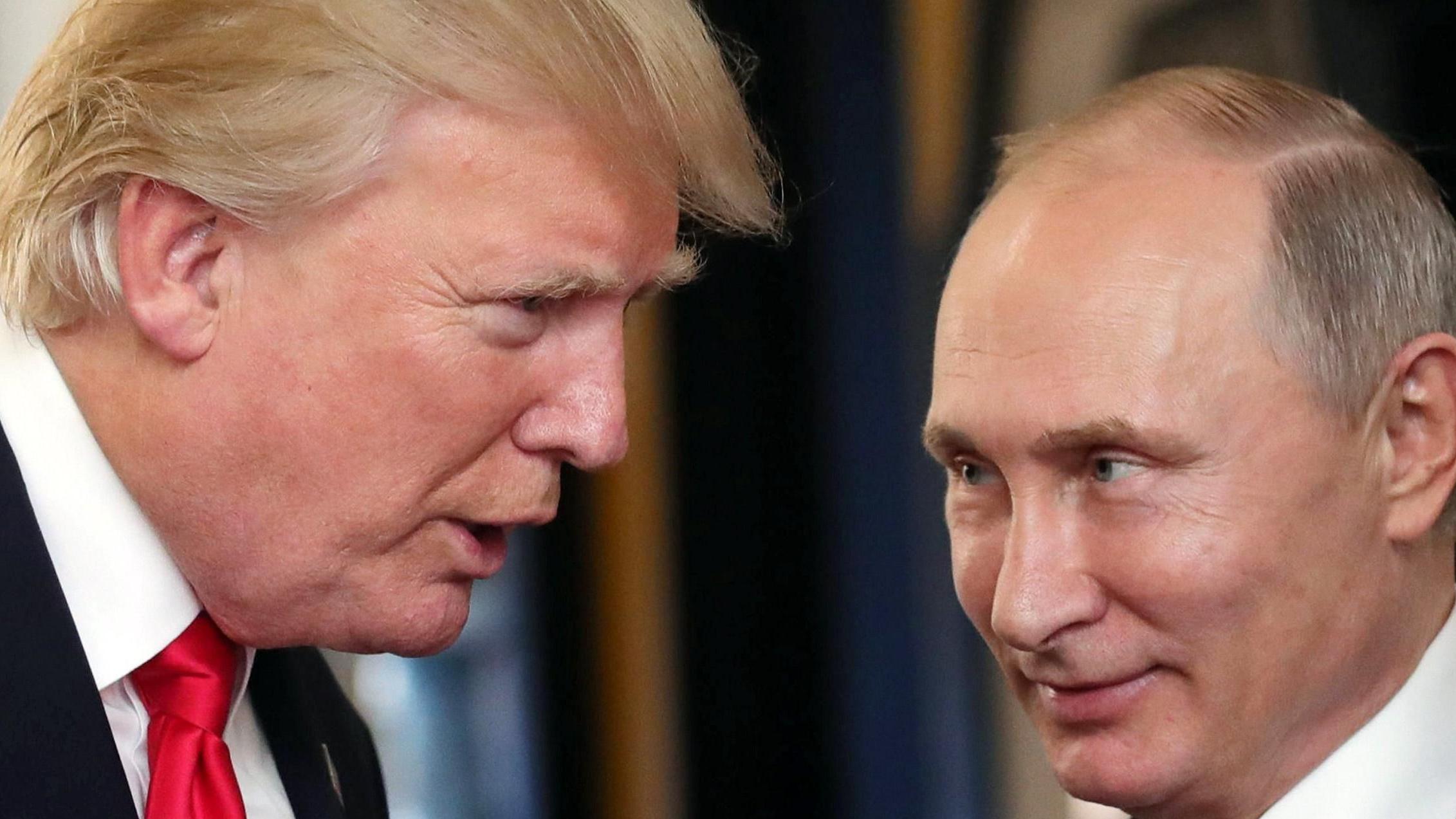

El gobierno de Estados Unidos ha reiterado su intención de aplicar sanciones secundarias a las entidades rusas, indicando así la persistencia de la presión económica a pesar de los recientes contactos diplomáticos entre el presidente ruso Vladimir Putin y el empresario estadounidense Elliott Witkoff. Funcionarios de la administración subrayaron que el régimen de sanciones sigue igual, describiendo las medidas económicas como independientes de las interacciones diplomáticas individuales.
This position arises following news of a fruitful discussion between Putin and Witkoff, a real estate developer based in New York, which had led to conjecture regarding possible changes in U.S. policy towards Russia. Senior officials from the State Department emphasized that although diplomatic pathways are still accessible, the sanctions aimed at Russia’s financial sector, energy exports, and defense industry will continue as scheduled. The administration considers these economic actions essential instruments for opposing Russian hostility and breaches of human rights.
The secondary sanctions initiative, encompassing international companies and banks engaging with sanctioned Russian organizations, forms an essential part of the U.S.’s approach to restricting Moscow’s access to global markets. Experts from the Treasury Department highlight that these actions have greatly hindered Russia’s capacity to obtain cutting-edge technology and sustain its defense-industrial base since they were put into effect after the 2022 incursion into Ukraine.
Financial experts observe that the maintained sanctions pressure occurs against a complex backdrop of global economic dynamics. While European allies have largely aligned with U.S. sanctions, some emerging markets have sought to establish alternative trade mechanisms with Russia. The Biden administration has consequently focused on closing loopholes and preventing evasion through third-party intermediaries, particularly involving sensitive dual-use technologies.
The Witkoff-Putin meeting, described by Kremlin sources as covering potential real estate investments and humanitarian issues, does not appear to have altered the fundamental calculus of U.S. policymakers. Diplomatic analysts suggest such unofficial contacts typically serve as channels for exploring positions rather than negotiating policy changes, especially when they involve private citizens rather than credentialed diplomats.
State Department spokespersons reiterated that any substantive changes to U.S. sanctions policy would require demonstrated progress on multiple fronts, including cessation of hostilities in Ukraine, accountability for alleged war crimes, and concrete steps toward democratic reforms. They emphasized that the administration’s approach remains coordinated with G7 partners, with regular consultations planned ahead of upcoming international summits.
Economic analysts observing the effects of sanctions observe that Russia’s economy has demonstrated unexpected resilience by replacing imports and shifting trade toward Asia, although this comes at a significant long-term expense to its technological progress and economic variety. The ongoing U.S. sanctions intend to exacerbate these inherent weaknesses while restricting Moscow’s ability to fund military activities overseas.
Legal specialists point out that secondary sanctions pose specific difficulties for global companies and financial institutions, as they must manage intricate compliance demands in various legal regions. Numerous leading European banks have encountered hefty fines for purportedly assisting transactions with sanctioned Russian entities, emphasizing the gravity of U.S. enforcement.
The administration’s position reflects ongoing debates within foreign policy circles about the optimal balance between economic pressure and diplomatic engagement. While some argue for maintaining maximum pressure until Russia meets all demands, others advocate for creating off-ramps that could incentivize de-escalation. The current policy appears to straddle these approaches by keeping sanctions in place while allowing unofficial diplomatic contacts.
As the 2024 election cycle approaches, Russia policy has emerged as an increasingly prominent issue in domestic political debates. Congressional leaders from both parties have generally supported tough sanctions measures, though with differing opinions about potential exceptions for humanitarian trade or energy market stabilization. This bipartisan consensus suggests limited likelihood of major sanctions relief in the near term regardless of diplomatic developments.
International relations scholars note that the U.S. stance demonstrates the growing role of economic statecraft in 21st century geopolitics. By leveraging the dollar’s global dominance and American financial market influence, Washington has developed sanctions into a powerful tool that can significantly impact adversarial nations without direct military confrontation.
The coming months may test the sustainability of this approach as global economic pressures persist and some nations grow increasingly restive about unilateral U.S. sanctions policies. However, administration officials express confidence in their ability to maintain international coordination on Russia sanctions, pointing to recent successful efforts to cap Russian oil prices as evidence of enduring multilateral cooperation.
For companies active in global markets, the continued sanctions system highlights the necessity for strong compliance processes and continuous due diligence concerning Russian partners. Legal consultants advise that businesses frequently examine Treasury Department recommendations and seek advice from sanctions specialists when considering possible deals related to Russian-associated regions.
The scenario also underscores the changing landscape of modern diplomacy, where classic state-to-state discussions are more frequently intertwined with economic strategies and informal channels. As competition between major powers becomes fiercer, such multifaceted methods will probably become more prevalent in global interactions.
Analysts will monitor a number of crucial indicators in the upcoming months, such as enforcement measures against sanctions violators, Russia’s economic performance measurements, and any indications of policy reassessment from leading U.S. allies. These elements will assist in deciding if the present sanctions strategy accomplishes its desired outcomes or needs modification.
For now, the administration’s message remains clear: while diplomatic communications may continue through various channels, the economic pressure campaign will persist until Russia’s behavior fundamentally changes. This firm stance aims to demonstrate resolve while leaving the door open for potential future negotiations should Moscow demonstrate willingness to address international concerns.
The enduring sanctions framework reflects a calculated judgment that maintaining economic leverage provides the best prospect for eventually achieving U.S. foreign policy objectives regarding Russia. As geopolitical dynamics continue to evolve, this approach will face ongoing tests of its effectiveness and sustainability in an increasingly multipolar world order.