Month: April 2026

Cambodia: manufacturing CSR focused on worker well-being and literacy programs

Cambodia CSR: Manufacturing Worker Well-being & Literacy

Cambodia’s manufacturing sector, largely centered on garments, footwear, and light assembly, has long powered the country’s export‑driven expansion and job creation. Employing hundreds of thousands of people—most of them women—it contributes a significant portion of national export revenue. In recent years, evolving global buyer standards, domestic labor reforms, and international oversight initiatives have encouraged many firms and brands to shift from basic regulatory compliance toward more forward‑looking CSR efforts that support worker well‑being and literacy. This article explores the reasoning, supporting evidence, program frameworks, obstacles, and actionable guidance for implementing effective CSR in Cambodian manufacturing, illustrating key points through examples…
Read More
Austria: manufacturing CSR prioritizing circular economy practices and worker well-being

Austria’s Manufacturing CSR: Prioritizing Circularity & Employee Welfare

Austria’s manufacturing sector has long combined engineering excellence with social responsibility. In recent years corporate social responsibility (CSR) strategies in Austria have shifted from isolated environmental or philanthropic projects to integrated models that couple circular economy practices with explicit commitments to worker well-being. The result is a distinctive approach: firms pursue material and energy efficiency, reuse and remanufacturing, and product stewardship while strengthening occupational safety, training, and social dialogue.Policy and regulatory driversStrong European and national frameworks guide corporate efforts:European Green Deal and Circular Economy Action Plan: encourage producers to prioritize recyclable design, broader producer responsibility, and sustained material reuse.Corporate Sustainability…
Read More
Spain: CSR initiatives strengthening labor inclusion and work-life balance

Corporate Social Responsibility Spain: Labor Inclusion & Work-Life

Over the last decade Spain has seen a convergence of regulatory change, corporate commitment, and civil society action that positions corporate social responsibility (CSR) as a central lever for improving labor inclusion and work-life balance. Companies, public agencies, and social organizations increasingly treat social performance as integral to competitiveness: inclusive hiring, flexible work arrangements, parental support, and targeted training are now common CSR pillars. This article summarizes the policy context, corporate practices, measurable impacts, representative cases, persistent gaps, and practical recommendations for scaling effective CSR in Spain.Policy and regulatory landscape influencing CSR- Spain’s labor and social policy evolution has created…
Read More
How is EUV lithography evolving to enable smaller process nodes?

EUV Lithography: Pushing Towards Smaller Process Nodes

Extreme Ultraviolet lithography, widely referred to as EUV lithography, stands as the pivotal manufacturing method driving the advancement of semiconductor process nodes below 7 nanometers. Harnessing 13.5 nanometer wavelength light, this approach enables chip manufacturers to create exceptionally compact and intricate circuit designs that earlier deep ultraviolet methods could not deliver economically or physically. As the semiconductor sector advances toward 3 nanometers, 2 nanometers, and even smaller scales, EUV lithography continues to evolve at a rapid pace to address extraordinary technical and financial challenges.From Early EUV Systems to Large-Scale Production ReadinessEarly EUV systems functioned mainly as research platforms, restricted by…
Read More
Amazon.com: LLLY - Pijama de algodón para parejas recién casadas ...

The Role of a Personal Shopper

A personal shopper is a professional who supports clients during their buying choices, typically involving fashion, luxury items, or thoughtful presents, and the position seeks to simplify each shopping experience while delivering tailored, knowledgeable suggestions that suit every client’s preferences, requirements, and lifestyle; personal shoppers might operate independently, be employed by a retail store, or work as part of a comprehensive concierge service.The Evolving Landscape of Personal ShoppingFor a long time, personal shoppers were linked mainly to upscale department stores and select boutiques, serving affluent customers above all. Over time, though, this profession has changed considerably. As e-commerce and digital…
Read More
What is vintage style?

Exploring the Concept of Retro Trends

The term "retro" evokes nostalgia and a return to styles and sensibilities of the past. But what exactly constitutes a retro trend, and why do they captivate consumers across generations? Let's delve into the concept of retro trends, exploring their origins, their influence on various industries, and examples that highlight their persistent allure.The Core Spirit Behind Retro TrendsA retro trend refers to the renewed popularity of styles, ideas, and visual motifs from earlier eras, often adapted or subtly reimagined to suit modern tastes. Such movements generally thrive by tapping into nostalgia, giving audiences a comforting link to what feels familiar.…
Read More
Fotos de stock gratuitas de alambrado, analytics, artificial brain

Secure Enclaves: Driving Confidential Computing Adoption

Confidential computing represents a security approach that safeguards data while it is actively being processed, addressing a weakness left by traditional models that primarily secure data at rest and in transit. By establishing hardware-isolated execution zones, secure enclaves bridge this gap, ensuring that both code and data remain encrypted in memory and shielded from the operating system, hypervisors, and any other applications.Secure enclaves are the practical mechanism behind confidential computing. They rely on hardware features that establish a trusted execution environment, verify integrity through cryptographic attestation, and restrict access even from privileged system components.Key Drivers Behind AdoptionOrganizations have been turning…
Read More
Norway: How energy transitions create investable opportunities beyond oil and gas

Norway’s Renewable Future: Investment Prospects Beyond Hydrocarbons

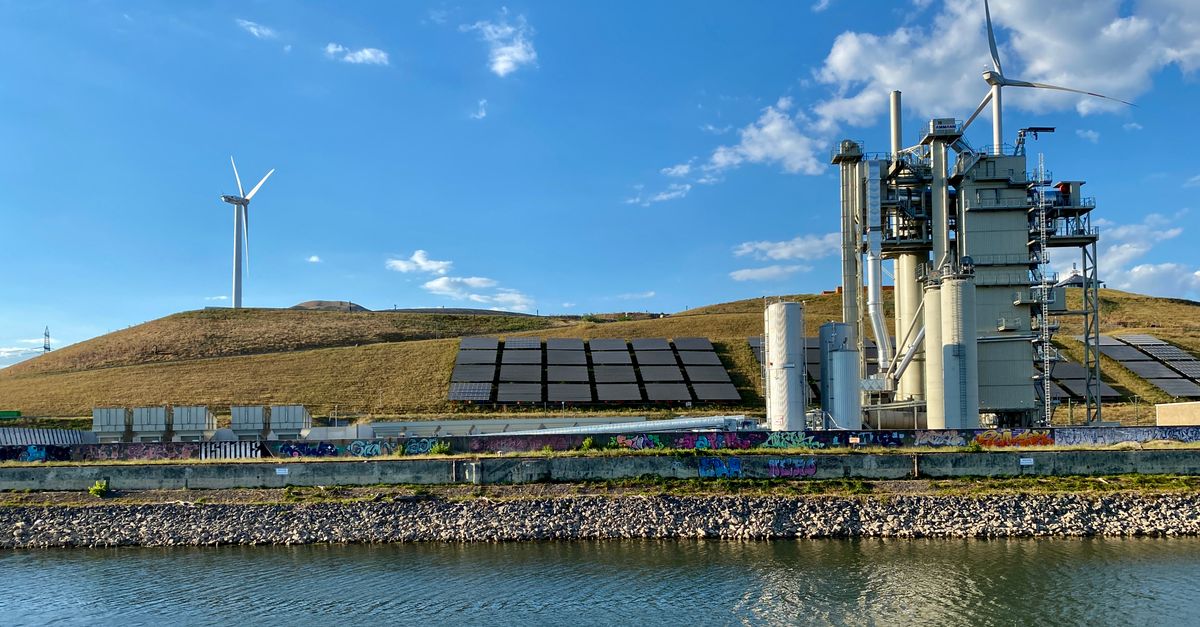
Norway has long been defined by oil and gas. Today it is redefining its comparative advantages — abundant renewable electricity, advanced maritime engineering, deep capital markets, and a skilled labor force — to create investable opportunities beyond hydrocarbons. The transition is not about replacing one revenue stream with another overnight. It is about turning energy-system strengths into sectors that attract private capital, scale industrial value chains, and decarbonize European and global demand.Why Norway Holds a Strong Strategic PositionNorway’s power system is dominated by hydropower, providing stable, low-carbon electricity across seasons. Annual generation is on the order of 130–150 terawatt-hours, with…
Read More
Chile: por qué las cadenas mineras abren oportunidades más allá de la extracción

The Future of Mining: Chile’s Value Chain Opportunities

Chile has long been synonymous with large-scale mining, especially copper. That dominance is changing the calculus of national development: extraction remains central, but the real economic and social leverage increasingly lies in capturing value further down the chain. Expanding activity beyond the mine— into processing, manufacturing, services, technology, and recycling — can multiply jobs, diversify exports, reduce vulnerability to commodity cycles, and accelerate decarbonization. The following lays out how and why these opportunities arise, with examples, data-driven context, and practical implications.Foundations: Chile’s mining landscape and its broader economic relevanceChile stands among the globe’s top copper producers and also plays a…
Read More
Why protectionism returns during uncertain times

Why Nations Embrace Protectionism During Periods of Uncertainty

Uncertainty—whether from financial crises, pandemics, geopolitical clashes, or sudden technological change—creates pressures that push governments and voters toward protectionist policies. Protectionism surfaces as a response to fear, political incentives, and strategic calculation. This article explains the forces that revive protectionism in bad times, illustrates them with historical and recent cases, examines economic mechanisms and consequences, and outlines policy options that can reduce the temptation to retreat behind trade barriers.Historical pattern and recent examplesProtectionism has long been more than a modern curiosity, exemplified by the 1930s Smoot-Hawley tariffs, when the United States raised duties to shield domestic industries, only to trigger…
Read More